

Send Message
Privacy statement: Your privacy is very important to Us. Our company promises not to disclose your personal information to any external company with out your explicit permission.


Min. Order:1
This cylinder body of the engine piston is made of aluminum alloy 6061-T5 with a total silver-white metal gloss. The surface has been machined with high precision and the texture is delicate. Structurally, it consists of four parallel cylindrical...

Min. Order:1
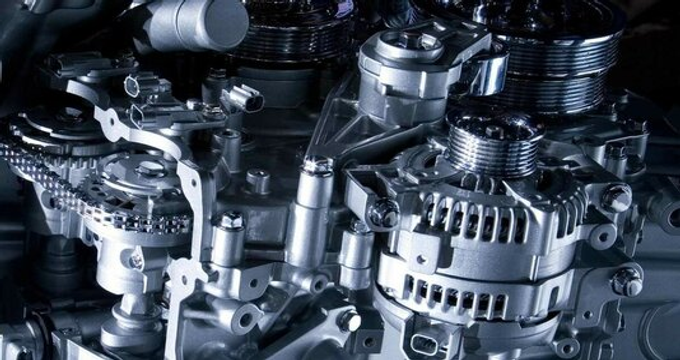
This engine casing is a Gravity Casting Part of Dongguan Shengpeng Precision Technology Co., Ltd. It is made of aluminum alloy 6061-T5 and has an overall silver-white metallic luster. The main body of the shell is a flat roof structure, with several...
一、What is Gravity Casting
Gravity casting, formally known as gravity metal mold casting, is a traditional casting process that utilizes Earth's gravitational force to naturally fill molten metal into pre-made mold cavities. After the molten metal cools and solidifies, the castings are removed. Its core characteristic is the absence of external forces (such as pressure or centrifugal force), relying solely on the metal's own weight for filling. It stands as one of the most widely applied and technically mature processes in the foundry industry.
二、Core Principles of Gravity Casting
Metal Melting: Heating raw metal materials (such as aluminum alloys, cast iron, copper alloys, etc.) above their melting points to produce liquid metal meeting specified composition requirements.
Gravity Filling: Slowly pour the molten metal through the sprue (pouring channel) into the cavity of a pre-made mold (typically metal molds, occasionally sand molds). Under its own gravity (approximately 9.8 N/kg), the molten metal flows naturally and fills every detail of the mold cavity;
Cooling and solidification: After the molten metal fully cools and solidifies within the mold cavity, the mold is opened to remove the formed casting. Subsequent cleaning (such as removing gates and risers, deburring) and machining processes are performed to obtain the final product.




CONTACT US


Privacy statement: Your privacy is very important to Us. Our company promises not to disclose your personal information to any external company with out your explicit permission.
Fill in more information so that we can get in touch with you faster
Privacy statement: Your privacy is very important to Us. Our company promises not to disclose your personal information to any external company with out your explicit permission.