


Send Message
Privacy statement: Your privacy is very important to Us. Our company promises not to disclose your personal information to any external company with out your explicit permission.
一、What is Anodizing?
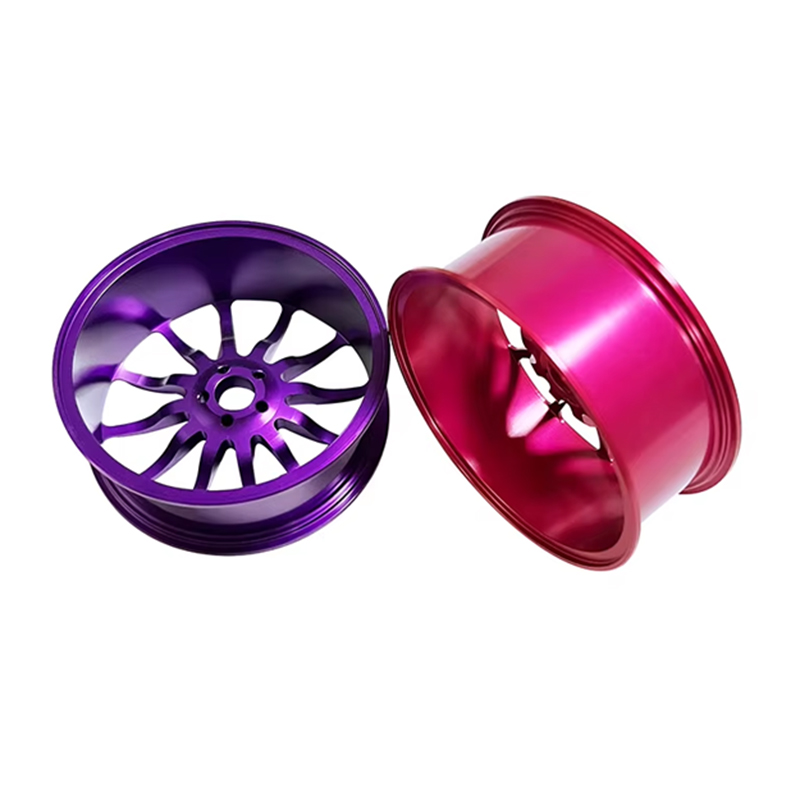
Anodizing is an electrochemical surface treatment process primarily used on aluminum and its alloys (though also applicable to non-ferrous metals like magnesium and titanium). It involves creating a dense, stable, porous layer of aluminum oxide (Al₂O₃) on the metal surface, thereby significantly enhancing the material's corrosion resistance, wear resistance, electrical insulation, and decorative properties.
二、Anodizing Surface Treatment: Diverse Types Catering to Multi-Industry Demands
As a core metal surface treatment technology, anodizing forms a dense oxide film on metal surfaces through electrochemical reactions. Its diverse types precisely match the needs of different industries. According to industry experts, the mainstream anodizing types currently include:
Chromic Acid Anodizing (Type I): Suitable for precision component processing with specific corrosion resistance requirements;
Sulfuric Acid Anodizing (Type II, Type III): Mature processes with controllable costs, dominating the market share. Type III hard-coat anodizing, leveraging its 25-150μm thick film advantage, is the preferred process for aerospace, precision machinery, and similar fields;
Organic Acid Anodizing: Tailored for specialized materials and performance requirements in customized processing scenarios;
Other Specialized Types: Phosphoric acid anodizing is commonly used for adhesive pretreatment, while borate bath anodizing plays a critical role in electrolytic capacitor manufacturing.
This diverse array of types collectively forms an anodizing technology system covering multiple application scenarios, providing precise support for metal processing needs across various industries.
三、Typical Applications of Anodizing in High-End Manufacturing
Aerospace Industry: Anodized titanium alloy components, combined with high-precision 5-Axis CNC Milling, achieve lightweighting and enhanced corrosion resistance for engine blades and landing gear structural parts, with weight reduction reaching 20%-30%;
New Energy Vehicle Industry: Aluminum alloy body components undergo anodic oxidation dyeing followed by Sheet Metal Bending and welding processes. This approach ensures body strength while enhancing aesthetic appeal and shortening R&D cycles by over 30%.
Construction and Electronics: Anodized aluminum alloy doors/windows and electronic device heat sinks have become industry-standard configurations due to their superior weather resistance and thermal dissipation properties.
四、Advantages and Limitations: Key Factors in Rational Process Selection
Significant Advantages:
Durability: Significantly enhances metal surfaces' resistance to corrosion, weathering, and abrasion.
Enhanced Surface Hardness: The hard oxide layer rivals or even surpasses the hardness of certain tool steels.
Excellent Insulation: The oxide film serves as a superior electrical insulator, suitable for electrical components.
Aesthetics and Adhesion: The porous structure readily absorbs dyes and coatings, offering color stability and enhancing product design value.
Environmental Safety: The oxide film is non-toxic and stable, meeting safety and environmental standards across numerous industries.
Limitations to Consider:
Material Restrictions: Primarily applicable to light metals like aluminum, magnesium, titanium, and their alloys; unsuitable for steel or copper alloys.
Minor Dimensional Changes: The oxide film increases part dimensions. For ultra-precision machined parts requiring micron-level accuracy, film thickness allowance must be incorporated in preliminary design.
Color Consistency Challenges: Batch dyeing may produce color variations due to process parameter fluctuations, necessitating strict control for high-standard appearance components.
Difficulty Treating Deep Holes and Complex Structures: Achieving uniform oxide films is challenging for parts with deep holes or intricate internal cavities (e.g., certain aluminum die-castings).
Potential Brittleness: Thick films, particularly hard anodized coatings, may develop microcracks under certain impact or bending stresses.
五、Conclusion
Anodizing serves as the critical bridge connecting CNC machining, Laser Cutting, sheet metal fabrication, and final product performance. With the growing demand for high-precision and customized manufacturing, precisely matching the anodizing process to product requirements has become a core element in enhancing product competitiveness, extending service life, and improving aesthetics. From aerospace to consumer electronics, this technology continues to empower high-end manufacturing while evolving toward greater environmental sustainability, efficiency, and controllability.

June 13, 2025
Email to this supplier
June 13, 2025
CONTACT US


Privacy statement: Your privacy is very important to Us. Our company promises not to disclose your personal information to any external company with out your explicit permission.
Fill in more information so that we can get in touch with you faster
Privacy statement: Your privacy is very important to Us. Our company promises not to disclose your personal information to any external company with out your explicit permission.